
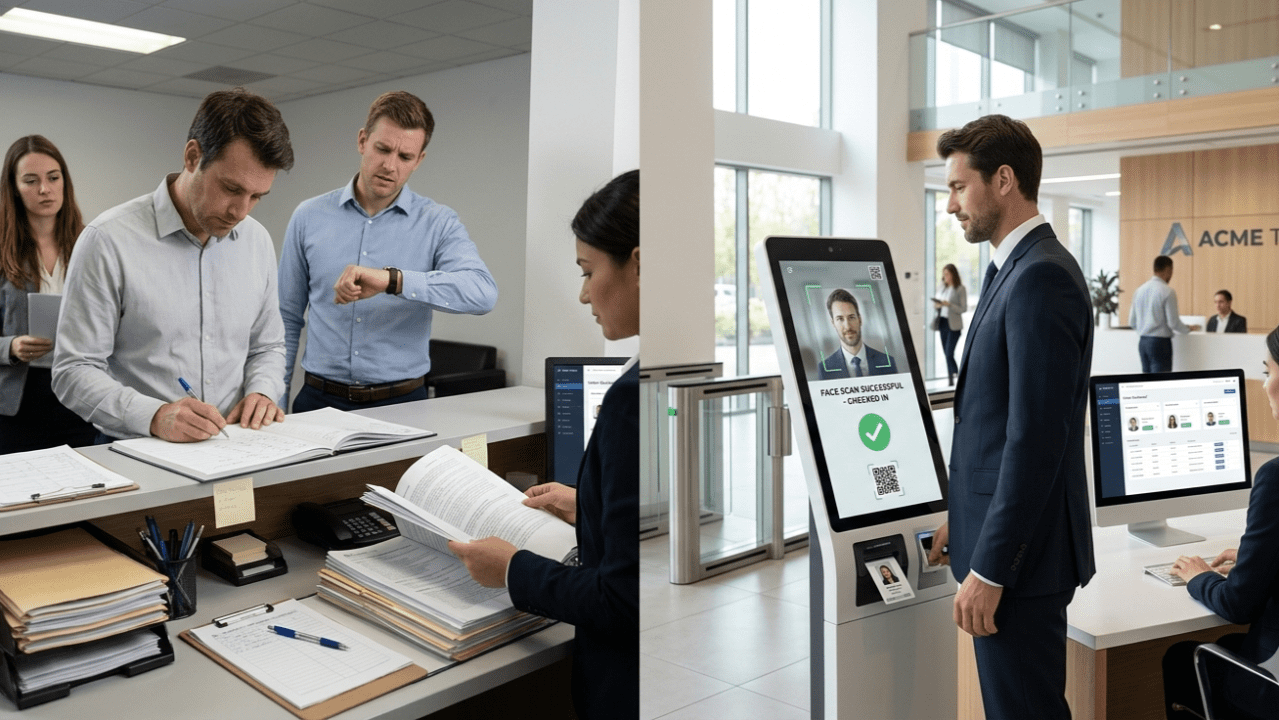

In today’s high-risk business environment, knowing exactly who enters and exits corporate facilities is essential. Traditional pen-and-paper visitor registers once served this purpose, but in the digital era they are slow, insecure, and difficult to manage.
In 2026, large corporations are rapidly replacing manual visitor logs with a digital visitor management system (VMS). These systems enhance workplace security, maintain real-time visitor records, and streamline reception workflows.
This article explores why companies are abandoning paper-based systems and how adopting a visitor management system improves both security and operational efficiency.
Why Companies Are Moving Away from Paper Visitor Logs
Large enterprises deal with hundreds of daily visitors, vendors, contractors, and clients. Manual visitor records can no longer support such high volumes effectively.
Here are the main reasons corporations now prefer a digital visitor management system.
1. Inefficiencies in Manual Registration
Paper-based visitor logs slow down reception operations, especially during peak hours.
Visitors often:
• Stand in queues,
• Fill out forms manually,
• Write illegible information,
• Cause delays at entry points.
Reception staff then spend time managing registers instead of assisting guests or handling core duties.
As companies expand across multiple offices, managing and searching paper records becomes nearly impossible. Audits, visitor tracking, and record verification take hours and often contain errors.
A visitor management system eliminates these challenges through:
• Quick digital check-ins,
• QR or pre-registration,
• Face recognition or biometric entry,
• Instant data capture.
This enables smooth visitor flow without increasing reception staff workload.
2. Major Security Gaps
Paper registers expose sensitive visitor data openly. Anyone at the reception can see names, phone numbers, or company details of previous visitors.
This leads to:
• Data privacy risks,
• Unauthorized access,
• Potential misuse of visitor information.
Manual systems also lack real-time visitor screening. There are no automatic alerts or background checks for watch listed individuals.
A modern visitor management system improves security through:
• Digital visitor records,
• ID verification,
• Badge printing,
• Access control integration,
• Centralized watch lists,
• Real-time host notifications.
Only authorized visitors gain access to restricted areas.
3. Lack of Emergency Safety Support
In emergencies like fires or evacuations, paper logs fail to provide accurate real-time data about people inside the building.
A digital visitor management system helps by:
• Tracking all visitors on-site,
• Generating instant evacuation lists,
• Sending emergency alerts,
• Supporting quick evacuation decisions.
This ensures faster and safer emergency response.
4. Poor Data Management and Compliance Risks
Industries such as IT, pharma, finance, and manufacturing undergo frequent audits requiring accurate visitor records.
Paper logs can:
• Get damaged or lost,
• Contain incorrect or incomplete information,
• Lead to compliance failures.
Digital visitor management systems provide:
• Tamper-proof records,
• Secure cloud storage,
• Easy audit access,
• Automated visitor reports.
Additionally, digital systems generate analytics such as:
• Peak visitor hours,
• Visitor trends,
• Frequent visitors,
• Space utilization data.
These insights help businesses improve operations and planning.
5. Productivity and Cost Loss
Manual visitor handling creates hidden costs, including:
• Printing registers and badges,
• Physical storage,
• Staff overtime during peak hours,
• Time spent correcting errors.
A visitor management system reduces administrative workload by up to 70–80% by automating processes.
Benefits include:
• Automatic host notifications,
• Faster check-ins,
• Reduced receptionist workload,
• Professional visitor experience.
Employees can focus on productive work rather than manual entry management.
Digital Transformation of Workplace Entry
Post-pandemic workplaces demand contactless and hygienic solutions. Digital visitor systems now offer:
• QR code check-ins,
• Contactless registration,
• Health declarations,
• Pre-scheduled visits,
• Integration with HR and access control systems.
This creates a connected and secure workplace ecosystem.
Final Thoughts
Paper visitor registers no longer suit modern corporate environments. They slow operations, risk data security, and reduce workplace efficiency.
A visitor management system provides accurate tracking, better security, automated workflows, and valuable visitor analytics.
Organizations adopting digital visitor solutions gain:
• Faster visitor processing,
• Stronger security,
• Compliance readiness,
• Enhanced professional image.
Businesses looking to modernize security and operations should consider switching to a reliable visitor management system to future-proof their facilities.