
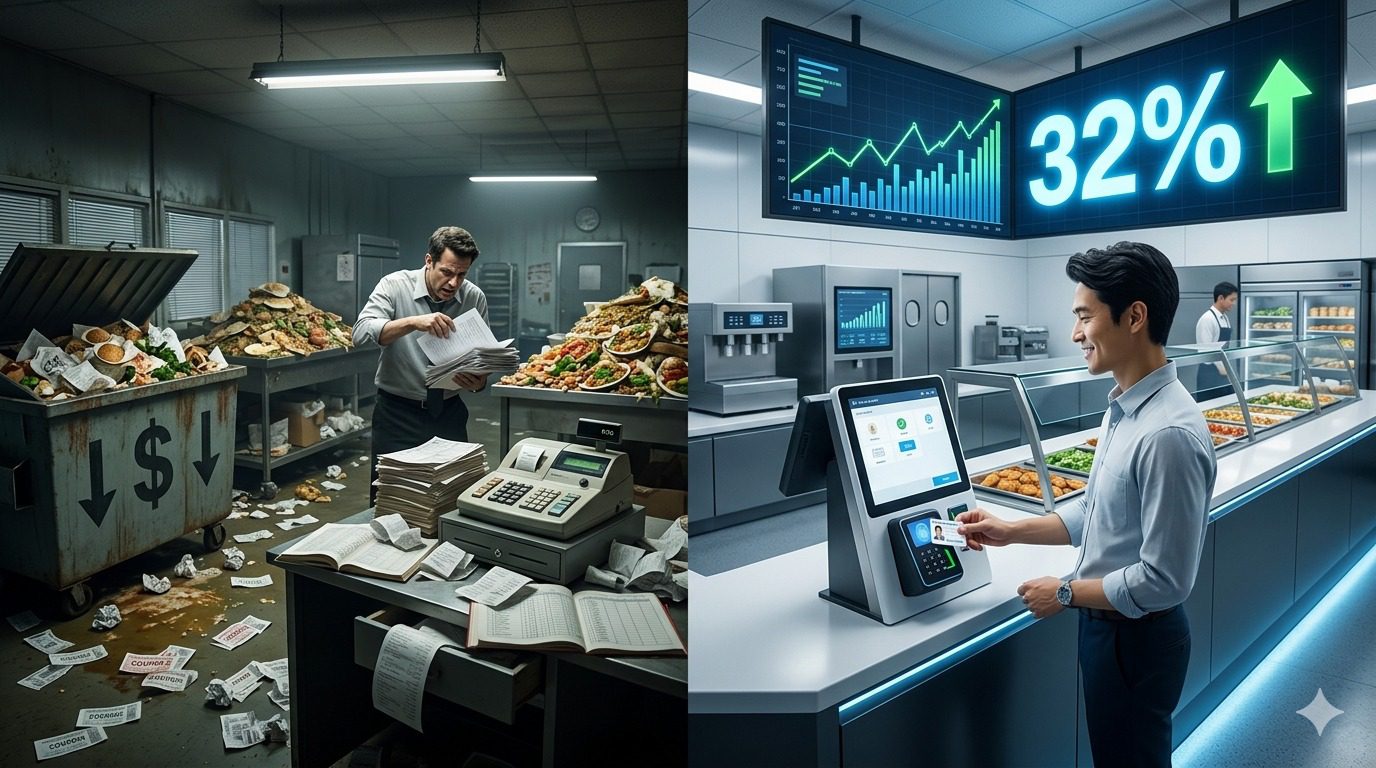

Can you guess how a Maharashtra manufacturing unit slashed its canteen losses by 32% in just three months? The company needed to solve three problems, such as rising food costs, inventory leakages and manual billing errors. The company implemented a smart canteen management systemto recover its operational control.
The unit converted its cafeteria into a data-driven operation through automated meal tracking, digital payment systems, consumption pattern monitoring, and waste-reduction measures. The automation strategy helps to decrease losses and increase both employee satisfaction and operational transparency.
The results showed immediate effects, requiring no time to measure their impact. Let us dive into the blog to know how automation transformed their food operations.
The Core Problem: Manual Processes and Zero Visibility
The company operated its canteen services manually. The operation used physical meal coupons, and staff maintained stock records through spreadsheet systems while vendor bills were processed at the end of each month.
The company experienced reporting delays because staff members could not track actual usage information throughout the day.
Key issues included:
- Duplicate or unauthorised meal claims
- Overproduction due to inaccurate demand forecasting
- Ingredient pilferage
- Vendor billing discrepancies
- No clear data on subsidy utilisation
Management realised that without real-time tracking and accountability, losses would continue to rise.
How Automation Strategy Helps
Step 1: Digital Meal Authentication
The first major intervention was the introduction of biometric and RFID-based meal authentication. The canteen management systemcombined employee data management with automatic meal entitlement verification based on payroll information.
Employees accessed meals through their ID cards instead of using paper coupons. The system recorded:
- Time of meal
- Type of meal consumed
- Department-wise usage
- Subsidy allocation
This system prevented unauthorised access while it removed duplicate entries. The first month of operation saw an 18% decrease in false meal claims.
Step 2: Real-Time Inventory Tracking
The kitchen staff used estimates to determine their food requirements because they lacked access to actual consumption data. The kitchen staff used kitchen supplies without proper inventory management to create more food than they needed.
The company established digital raw-material tracking systems through the installation of its inventory module. The kitchen received all ingredients, which were documented, while the canteen management system tracked actual meal counts.
This data-driven alignment allowed the team to:
- Forecast demand accurately
- Reduce excess cooking
- Monitor ingredient usage variance
- Identify high-wastage items
Step 3: Vendor and Billing Automation
The verification process for vendor invoices required manual checks at the end of each month. Price variations and quantity mismatches were hard to detect.
The automated solution introduced digital purchase orders, inward stock verification and invoice matching. All procurement data was transferred directly into the canteen management system, which enabled the following functions:
- Accurate price comparisons
- Automated discrepancy alerts
- Faster approvals
- Transparent vendor performance tracking
The system improved cost control while reducing procurement-related expenses.
Step 4: Cashless Transactions Together with Subsidy Management Procedures
The business faced reconciliation issues because cash transactions caused errors, resulting in concealed financial losses. The management implemented a complete cashless system that operated with the canteen management system. The main improvements brought forward by these changes.
Key improvements included:
- Prepaid wallet or salary deduction options
- Defined meal subsidies by employee category
- Automated billing reconciliation
- Elimination of manual cash handling
The system delivered major benefits by reducing financial discrepancies and increasing visibility. Employees could view their meal history, while the finance team received accurate automated reports, saving hours of manual accounting effort each week.
Step 5: Strengthening Accountability and Governance
Automation created accountability at every operational level. The kitchen staff used digital systems to record their production output. Store managers tracked their inventory usage through live system updates. Supervisors accessed daily reports for monitoring rather than waiting until monthly reports were available.
Audit trails ensured that every transaction could be traced back to its source. The canteen management systemmaintained detailed records of all changes, including edits, cancellations, and system modifications, to prevent any attempts at unauthorised access.
Internal audits became easier to conduct because the organisation used compliance reports, which reduced both time requirements and administrative work.
Step 6: Continuous Monitoring and Policy Optimisation
The organisation required ongoing monitoring alongside its automated systems because both elements were integral to achieving long-term operational success. The last stage implemented internal policy improvements using reports from the canteen management system.
The company introduced:
- Weekly performance reviews
- Vendor scorecards
- Monthly wastage benchmarks
- Budget variance analysis
Financial Impact After Three Months
The results were measurable and immediate:
- 32% reduction in overall canteen losses
- 19% improvement in inventory efficiency
- 21% reduction in food wastage
- 8% savings in procurement costs
- 90% drop in billing disputes
- 40% reduction in administrative workload
The faster service and transparent billing improved employee satisfaction, resulting in financial savings for the company.
Get In Touch With DAccess for the Best Canteen Management System software
The remarkable 32% reduction in canteen losses within just three months proves that the right automation strategy can transform operational efficiency and cost control in manufacturing units. Get in touch with DAccess today to streamline your food operations and eliminate revenue leakages with the best canteen management system software.
Empower your organisation with real-time tracking, automated billing, inventory control, and detailed analytics that drive smarter decisions. Don’t let manual errors and wastage impact your profits. Partner with us to modernise your canteen processes, boost transparency, and maximise savings. Contact us now and take the first step toward a smarter, more profitable canteen management solution!