
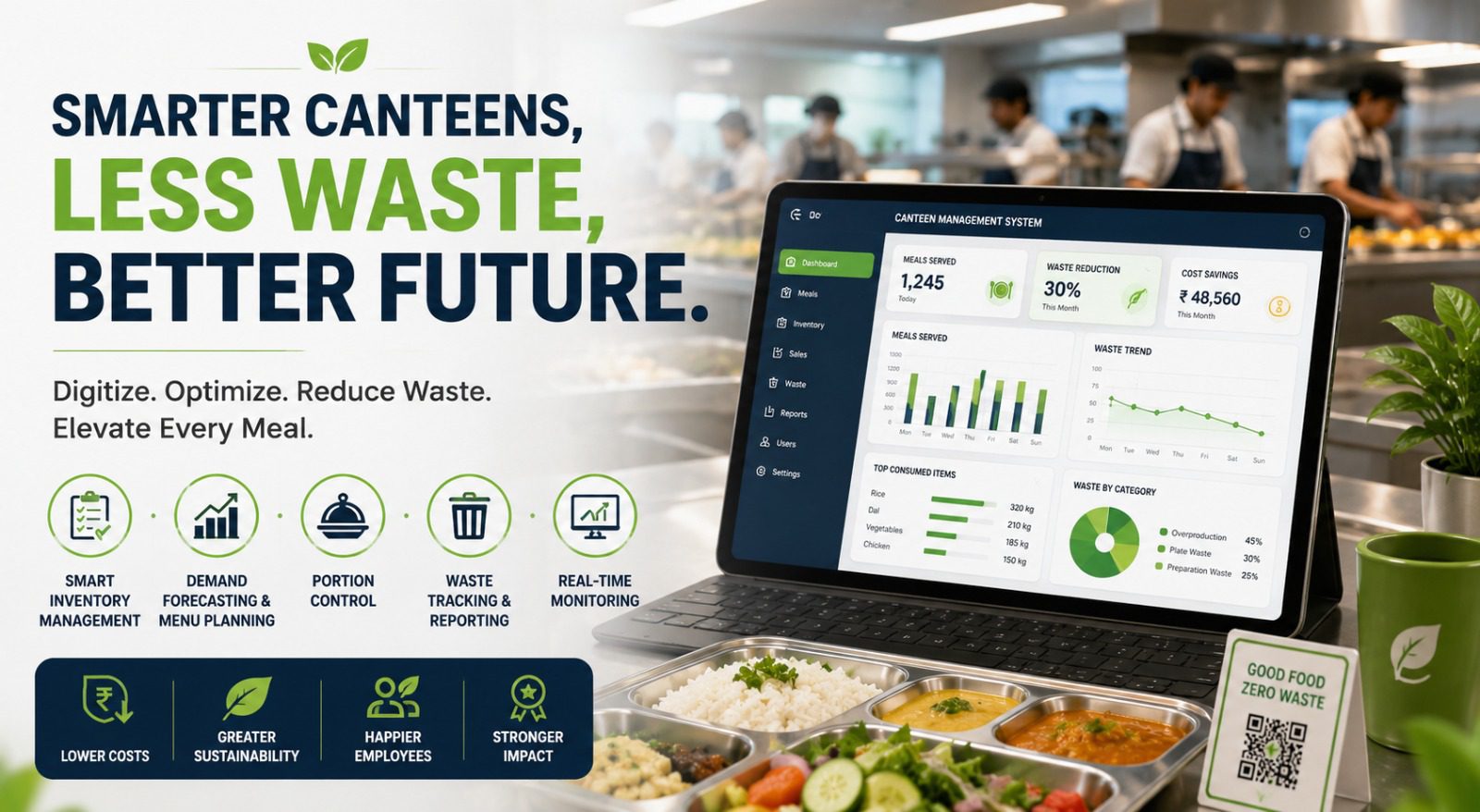

A worrying habit in the major industrial canteens and food processing facilities worldwide is food waste. The food service industry accounts for the majority of the millions of tons of food that are wasted annually.
This happens even in countries that struggle with poverty and malnutrition. Overproduction, bad storage process, and a total lack of responsibility for food-related concerns are bad. The large scale canteen and food processing companies produce huge amounts of food waste.
This waste of the facilities affects environmental sustainability and contributes to the depletion of natural resources.
The Canteen Management System from DAccess revolutionises daily operations in corporate and institutional cafeterias by streamlining inventory tracking and order processing.
Blog About Canteen Management Systems
This blog examines the problems and possibilities with CMS related to lowering food waste in the industrial canteen and food processing industries.
It also talks about the steps that companies may take to lower food waste, make better use of their resources, and promote sustainability initiatives.
Businesses can manage waste, spend less on food products, and better support sustainable practices if this sector of the food service industry employs waste management techniques.
Some are proper portioning, documenting wasted product, composting, and the elimination of waste in an environmentally sustainable manner. Read below to learn how facilities cut food waste using canteen management systems for digitised canteen operations.
With real-time analytics, this software helps reduce food waste and ensures fresh meals are always available for staff.
The Role of General Canteen Management Systems or CMS in Reducing Food Waste
By combining technical solutions with data analytical techniques, canteen management systems exist as crucial instruments for reducing food waste. These technologies support efficient inventory management, which leads to efficient tracking and use of food supplies.
Businesses can foresee food demands based on past data thanks to the improved demand forecasting capabilities of CMS, which reduces needless production.
CMS streamlines the food preparation procedures, allowing for accurate quantity preparation and reducing the creation of extra food. By combining various information systems, industrial canteens are able to significantly reduce waste and save money.
Key Features of Canteen Management Systems or CMS
Inventory Control.
By guaranteeing appropriate stock rotation and timely ingredient use, CMS precisely tracks food supply. This prevents overstocking and lowers the likelihood of food spoilage.
Forecasting Demand And Creating A Menu.
CMS forecasts demand and modifies production levels by examining past data and patterns. This ensures that only the necessary quantity of food is prepared, reducing waste.
Control Portions.
By standardising portion proportions, CMS ensures that servings are suitable and consistent, which helps to prevent plate waste and wasteful food intake.
Tracking And Reporting Of Waste.
Sophisticated CMS systems monitor waste trends, giving companies useful information to spot inefficiencies and make data-driven waste reduction decisions.
Real-time Monitoring.
Digital CMS tools allow for real-time monitoring of food production, reducing overproduction errors and boosting overall efficiency. This ensures that usable food is prepared after knowing the actual demand.
Benefits of Reducing Food Waste in Large Canteens and Processing Plants
Impact On The Environment.
Food waste should be reduced at industrial canteens and processing facilities since doing so saves carbon emissions and conserves resources. It also lessens environmental harm by reducing landfill garbage.
Cost Savings.
When waste management is done correctly, significant cost savings are achieved. Reducing food waste lowers production costs, energy costs, and waste management costs. All of these directly improve the bottom line of the business.
Enhanced Perception Of The Brand.
Reducing food waste explains a group is having a commitment to environmental responsibility. Thus, businesses trying to enhance their brand image using sustainable practices have to concentrate on doing so. The business boosts brand awareness among diverse demographics, from customers to investors and all other stakeholders.
Increased Employee Satisfaction.
Employee satisfaction in the workplace can be raised by acceptable food management and portion control. The management of food resources helps the total quality of food while suppressing waste and enabling a positive working space that increases employee morale and productivity.
This software helps canteen operators track daily sales and consumption patterns. These tools enable better budgeting and menu planning.
Practical Options for Reducing Food Waste in Large Canteens
Put The Guidelines For Waste Reduction Into Practice.
Projects should include detailed rules that specify food quality, amounts, and disposal procedures. Workers should collaborate with vendors and canteen personnel to develop waste reduction procedures that align with food preparation techniques.
Include Workers in the Procedure.
Employees must be taught how to minimise food waste, control portion sizes, and uphold responsible eating practices through the deployment of crucial training programs.
Significant changes in employee behaviour apart from a decrease in food waste are what you will see when employee participation in waste reduction initiatives is done. Their raised awareness of waste practices helps.
Work Together With Food Banks And Nonprofits.
Any food that is still edible after it has expired might be donated to food banks for philanthropic purposes. In addition to reducing waste, the practice assists those who are food insecure as well as the community as a whole.
With features like member registration and transaction history, the software ensures transparent and accountable cafeteria operations for both staff and management.
Utilise Technology.
To detect waste, automate procedures, and precisely predict food consumption, invest in CMS and other food management technologies.
This guarantees more effective food production, lowering the possibility of excess waste and enhancing waste management in general.
Companies that put action plans into practice will see better financial results as well as positive effects on the environment and society. Together, we can create sustainable food systems that help the industrial sector and help create a zero-waste future.
Final Thoughts
When food is wasted, industrial canteens and processing facilities must address two problems since it has an impact on the economy and the environment.
When combined with sustainable practices, canteen management systems (CMS) make food waste management an effective tool for businesses to reduce waste output, maximise resources, and save costs.
Boost your canteen efficiency today by contacting DAccess now to implement their cutting-edge Canteen Management System and transform your operations.