
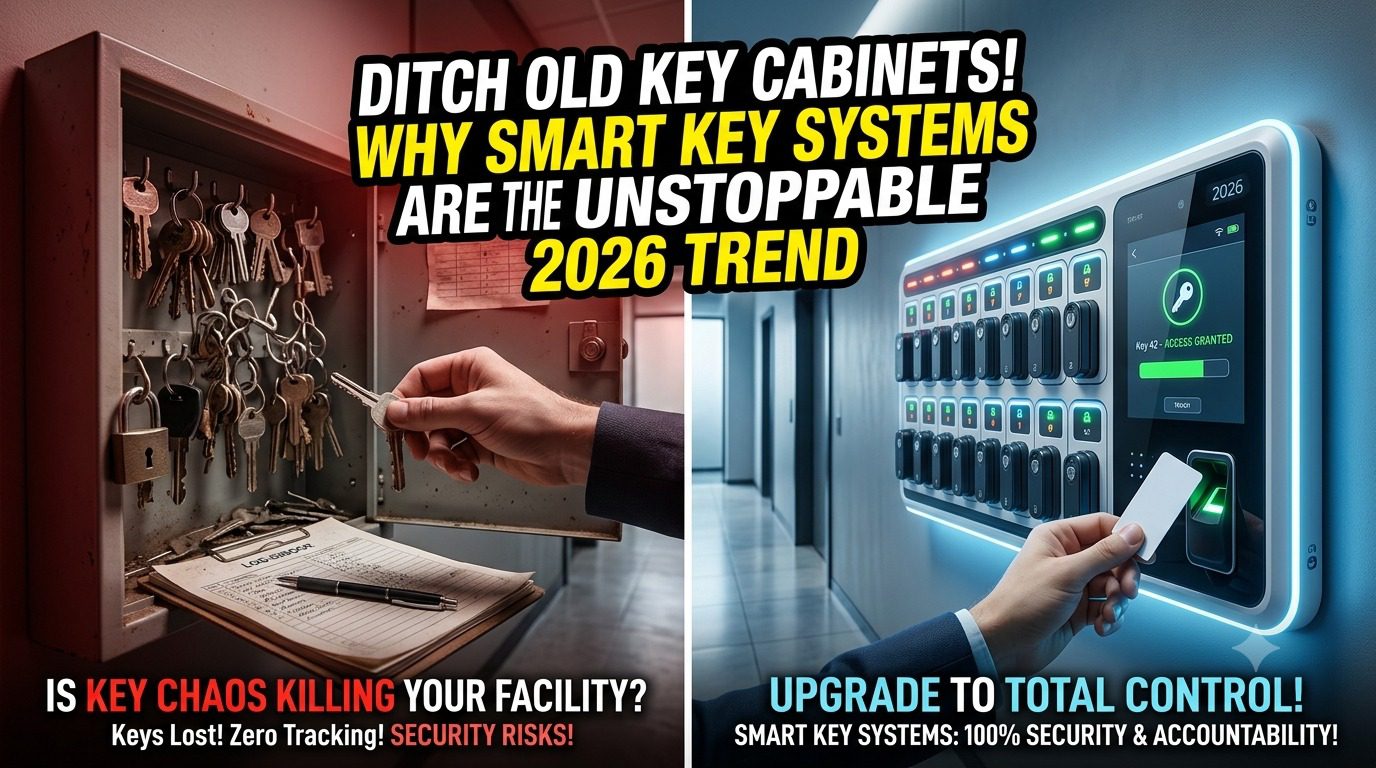

Key management has been integral to the operation of buildings and properties for decades now. Offices, manufacturing plants, warehouses, hospitals, educational institutes, retail stores, etc., may hold several hundred keys that require tracking and protection. Conventional key cabinets have been in use for several years now, and they do pose certain difficulties.
Loss of keys, ineffective tracking, and unauthorised access present significant security risks. A key management system allows companies to keep their keys under better control and security. In this blog, we explore why key management systems are replacing traditional key cabinets.
Drawbacks of Standard Key Cabinets
Standard key cabinets are effective tools for storing keys, but they offer little to no control over who uses the keys or when they are returned. In many organisations, keys get lost, unauthorised people gain access to them, and some are even misused by employees. Some of the major drawbacks of them are as follows,
- No traceable key use history
- Problems with locating missing keys
- Uncontrolled access to keys
- Key location delays
- Security hazards
Such issues make them ineffective tools for modern facilities that require more secure key management.
What Is a Smart Key Management System?
A key management system is a high-tech solution for managing keys. It relies on technology such as personal identification numbers, access cards, biometrics, and monitoring systems to control access to the keys. The system automatically loses every activity related to the keys. Managers can tell who accessed a specific key, when they accessed it, and when they returned it.
Enhanced Security for Contemporary Facilities
One of the most important factors driving facility managers to consider installing a key management system is the rising demand for enhanced security. A key management system provides improved security in these ways:
- Access will be granted to only authorised personnel
- Each and every transaction will be tracked
- The risk of losing the keys will decrease significantly
- Keys cannot be borrowed by anyone without authorisation
- Overall, facility security will improve dramatically
Complete tracking and restricted access will help to minimise any existing security risks associated with keys.
Real Time Tracking and Monitoring
One significant benefit of using a key management system is real-time tracking and monitoring. The facility manager does not have to look into the logs for any lost keys or key checks themselves. Some important details that can be instantly provided by the system include,
- Current key locations
- User access history
- Overdue key returns
- Key usage patterns
- Security alerts
This real-time visibility helps managers make faster decisions and respond quickly when issues arise.
Enhanced Employee Accountability
Accountability plays an important role in any business environment. If employees are aware that their key-related activities are automatically tracked, they will be more inclined to follow the safety guidelines. With a Key Management System, it becomes possible to create a trail of accountability in which all activities performed using the key are documented.
Saving Time and Decreasing Manual Efforts
Manual key management may require considerable time. Employees are required to sign log books, verify key records, and investigate lost keys. With an effective Key Management System, these processes become automated. Thus, employees can access their keys faster, and managers can produce any necessary reports instantly. Advantages include:
- Rapid access to keys
- Less documentation
- Automatic reporting
- Saving time from administration
- More efficient work environment
These time-saving advantages enable facility employees to concentrate on other important tasks.
Facilitating Compliance and Audit Processes
Many fields must comply with security and compliance measures. It is common for these measures to require maintaining proper records of key access. Using a key management system, one can generate logs that can be accessed during audits. The manager will be able to prepare reports regarding access and key usage. Some of the benefits include:
- Compliance management
- Record keeping
- Audit facilitation
- Security policy enhancement
- Accountability
Access to logs and reports simplifies compliance processes.
Integration With Modern Facility Technology
Facilities in 2026 will become much smarter and more interconnected than ever before. The majority of facilities now have access control systems, building management systems, and other kinds of software used for security purposes.
Modern key management systems can usually integrate with such technologies, providing an overall approach to security management. When integrated with other security systems, key management provides greater control over access across the entire facility.
Savings on Costs in the Long Run
Smart key systems demand an upfront cost. In most cases, they save money in the long run. It is possible to incur losses due to lost keys, lock replacements, increased security breaches, and administrative issues within an organisation. A key management system will reduce costs through improved security and more efficient operations. Some of the ways in which it does that include,
- Decreased cases of lost keys
- Minimal lock replacement costs
- Enhanced security levels
- Decreased administrative costs
- Better management of resources
These are the reasons such systems have proven worth investing in.
Why More Facility Managers Are Making the Switch
Workplace security requirements in 2026 will be drastically different from those in previous years. Companies now demand increased transparency, improved security, and greater efficiency. It is increasingly difficult to meet these requirements with standard key cabinets.
A key management system allows facility managers to track keys, manage security, improve accountability, and increase efficiency. Electronic key management systems are becoming an integral part of any facility security strategy.
Wrapping Up
The transition from conventional key cabinets to a key management system results from the need for enhanced security, accountability, and efficiency. Modern key management systems provide facility managers with full control of key usage without posing any danger to the organisation from lost or misappropriated keys.
The benefits of real-time monitoring, recordkeeping, and enhanced access control in such systems can prove very valuable for contemporary facilities. As facilities become increasingly modernised in 2026, implementing a key management system is among the best strategies for improving security.