
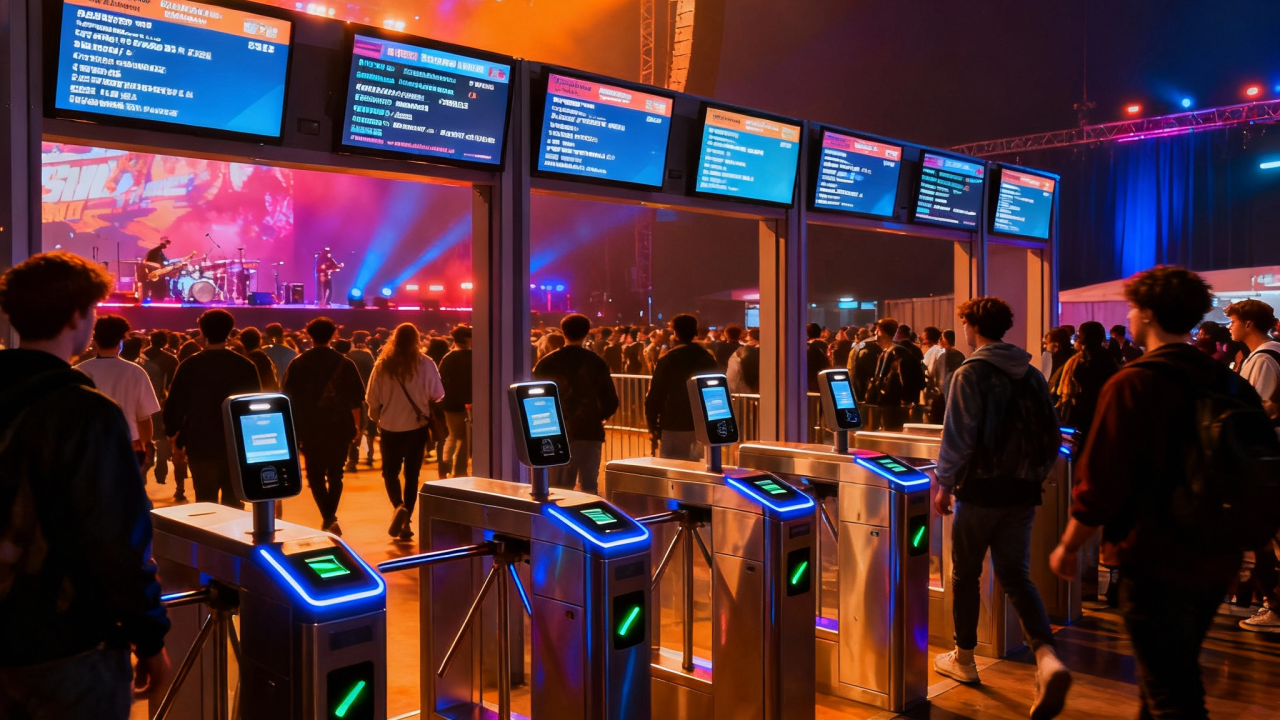

Imagine you are the event manager of a crowded musical concert. Thousands have flocked to see their favorite singer in action. The entry begins, and people start checking in. Soon, the entrance points, managed manually by your security personnel, start overcrowding. Queues become longer. The frustration mercury rises with every second. Attendees start getting furious. The result? Chaos!
Now, you will resonate with the above if you are someone who’s been there and done that. In today’s age, people don’t expect service alone. They look for experiences! Events are a vibrant, festive environment, where attendees brim with energy and excitement. Thus, a slow, manual entrance process can disappoint them and ruin the mood. Let alone the potential security threats that it can create.
But this is where entrance automation systems step in. They flip the script with their intelligent, tech-driven features and functionalities, transforming event experiences. So, let’s discover in what ways entrance automation works the magic out.
Common Entrance Challenges of Manual Security Management
In an age where pace, precision, and experiences define everything, relying fully on manual security management can pose many challenges. Some common ones include;
· Long Queues and Delays: Verifying tickets or passes manually is a laborious process that often creates bottlenecks, particularly during rush hours.
· Manual Verification Errors: Manual verification can be error-prone. This can lead to unauthorized entrants entering the event venue.
· Security Risks: Counterfeit tickets and unauthorized entrants can compromise the event’s security and integrity, leading to potential security situations.
· Poor Crowd Flow Management: Inefficient entry points and unclear navigation can lead to discomfort, congestion, and even safety concerns.
· Limited Data Insights: Manual entries offer limited or potentially inaccurate insights into the number of people inside the venue. While this affects crowd planning, it can affect security effectiveness during instances like evacuation.
· Negative Impressions: Bad experiences often create negative impressions, resulting in bad word of mouth, event boycotts, etc.
This is where entrance automation plays not just an important but a critical role. Let’s see how it helps manage entry points better, quicker, and enhance event experiences.
7 Ways Entrance Automation Transforms Event Experiences
From streamlining entries to providing comprehensive analytical insights, here’s how you can deliver events with entrance automation systems.
1. Instant, Contactless Entry
Entrance automation quickly and automatically scans visitor passes and tickets. Once verified, the system auto-allows the attendee inside the venue. This helps reduce the time otherwise spent in manually verifying each ticket. It streamlines entries and expedites visitors throughout, preventing crowded queues and frustration.
2. Improved Security and Fraud Prevention
While managing entrance points for crowded events, you cannot fully rely on manual verification checks. It is because manual verification can be prone to errors. Mistakes in checking information can allow an unauthorized entrant to enter the venue. It can result in potential security situations.
3. Real-Time Crowd Monitoring and Control
Entry systems enabled with IoT (Internet of Things) provide live data and visitor flow and density. Therefore, as an event manager, you can monitor entry gates, forecast congestion points, and redirect crowds dynamically to avoid cluttering at a single point. By expediting movements, it can help prevent overcrowding, minimize security threats, and enhance the overall visitor experience.
4. A More Personalized Attendee Experience
Automation isn’t anchored to managing entry points. When you integrate it intelligently with your existing event management systems to recognize VIPs, greet guests by their name, or guide attendees to their designated sections. This adds a layer of personalization that goes miles while redefining event experiences!
5. Streamlined Staff Resource Allocation
While providing live data feeds, entrance automation also helps you analyze historical data to understand crowd patterns across various entrance points. You can then determine the staff strength at different entrance points across multiple points in time.
Therefore, each entrance point remains optimally staffed at every moment. Having enough, or precisely the number of people, a particular entrance zone requires, helps manage event entrances better and create more positive impressions.
6. Seamless Integration with Event Management Systems
Advanced entrance automation systems can be integrated with various existing systems. For instance, you can combine it with ticketing systems, CRM platforms, and event applications. Therefore, the system enables holistic management from registering a particular attendee to their presence in the event premises. Additionally, it can help streamline event operations, communication, and reporting.
7. Useful Analytical Insights
Tech-powered entrance automation systems offer real-time and historical insights into various aspects such as entry timings, attendance peaks, and visitor demographics. This information can be gold, particularly while planning events more efficiently, making informed decisions, and personalizing the overall event experience.
From Struggles to Seamless Experiences – Embrace the Power of Intelligent Technology with DAccess’s Entrance Automation
Would you like to learn more about our entrance automation systems or book a demo for better decision-making? Please email us at info@daccess.co.in.