
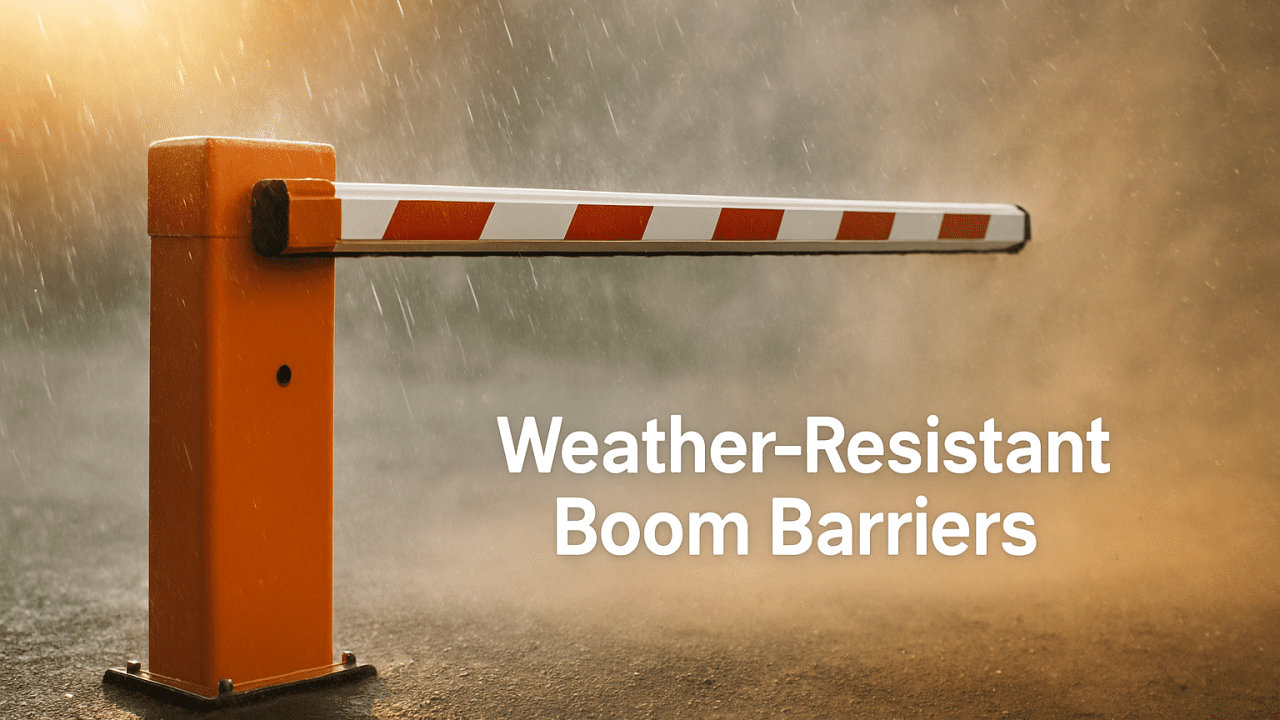

Boom barriers are long metal arms, enabling vehicles to enter or exit a premises. Physically, yes! But in India, where the weather throws quite the curveball, you need more than just a functional boom barrier. You need a weather-resistant also.
However, while enduring the winters of Srinagar to Tamil Nadu’s humidity, what should a weather-resistant boom barrier have? The specifics may vary depending on the security needs, weather conditions, etc. But generally speaking, here are some factors to consider while designing boom barriers that endure weather.
- Understanding Climatic Diversity
India experiences extreme climatic variations. From the extreme heat of Rajasthan to the freezing winters of the Himalayan belt, India experiences it all. Entrance automation systems like boom barriers must be prepared for such conditions. Some primary weather factors to consider include;
- Extreme heat that may reach 50 degrees Celsius
- High humidity in Mumbai and other coastal regions
- Extreme cold in Sikkim, Kashmir, etc.
- Torrential rains across places like Kerala, Meghalaya, Konkan, etc.
- Dust and pollution in urban areas
2. Selecting the Right Material
Boom barriers undergo constant wear and tear due to external weather exposure. Accordingly, you must select a robust material to withstand diverse weather conditions and ensure the boom barrier serves you for a long time. Some popular options include corrosion- and rust-resistant materials like stainless steel, galvanized steel, or aluminum. Plus, the boom barrier can be powder-coated for an extra protection layer.
3. Lightning Protection
India receives torrential rains across many places. Hence, the weather in many of these places is often stormy, resulting in thunderstorms. In such places, lightning strikes are a real threat. Thus, it implementing fundamental lightning protection measures like grounding rods and surge protectors is crucial. It can help shield the critical and sensitive electronic components from damage resulting from power surges.
4. Monsoon Sealing
Floods and high humidity are among the realities of the Indian monsoon. In a situation like this, it is important to seal the boom barrier to prevent water from damaging the barrier’s internal mechanisms. A couple of measures include weatherproofing gaskets and drip channels. While gaskets protect the internal mechanisms from soaking in water, drip channels help direct rainwater away from critical zones.
5. UV Protection
Many parts of India also receive abundant sunlight. With prolonged exposure to sunlight comes the risk of UV exposure. This can cause materials to weaken, crack, or fade, affecting the boom barrier’s functionality and appearance. Thus, to mitigate the impact of the harmful UV rays of the sun, the boom barrier must have,
- UV-Resistant Paint or Coatings: These keep the surface of the boom barrier intact even when exposed to intense sunlight.
- UV-Resistant Polycarbonate Covers: Control panels can be covered with these covers to secure the barrier’s internal mechanisms.
6. Solid Foundation and Anchorage
Winds during pre-monsoon and monsoon can pressurize the barriers, weakening their foundation. Hence, it is essential to have a robust base and secure anchoring to keep the barrier stable and functioning even during windy circumstances.
7. Local Terrain Adaptability
Dust is common everywhere in India. However, dust accumulation can affect the barrier’s functioning in the long run. Thus, the internal components must be covered in dust-proof casings to prevent dust and dirt accumulation, obstructing movements or resulting in malfunctions. Additionally, in environments where vehicles of varying heights enter or exit the premises, barriers with an adjustable height must be installed.
Visibility can become significantly low in areas that receive heavy rainfall, turn foggy, or experience frequent dust storms. Low visibility can lead to mishaps. For instance, a vehicle driver who couldn’t see the barrier due to poor visibility can collide with it, causing damage. Thus, the boom barriers must have high-visibility reflective strips to ensure people can see even amidst poor visibility conditions.
Final Words!
Boom barriers aren’t just entrance automation systems but security elements, critical to the safety of a premises. Many elements, including weather, can affect their operations. While you cannot control the weather, you can tackle it to ensure the barriers stay anchored, functional, and secure despite exposure to extreme weather conditions.
If you are looking for such boom barriers, you must choose DAccess.
We are a trusted provider of entrance automation systems, including thoughtfully engineered boom barriers that stand the test of time and function optimally in every condition. Our boom barriers are used across various industrial, commercial, and residential complexes. They are robust, efficient, and can be aesthetically customized.
Want to know more about our entrance automation systems? Email us at info@daccess.co.in and connect with our experts.
📲 Call: 93257 13320
🌐 Visit: www.daccess.co.in